
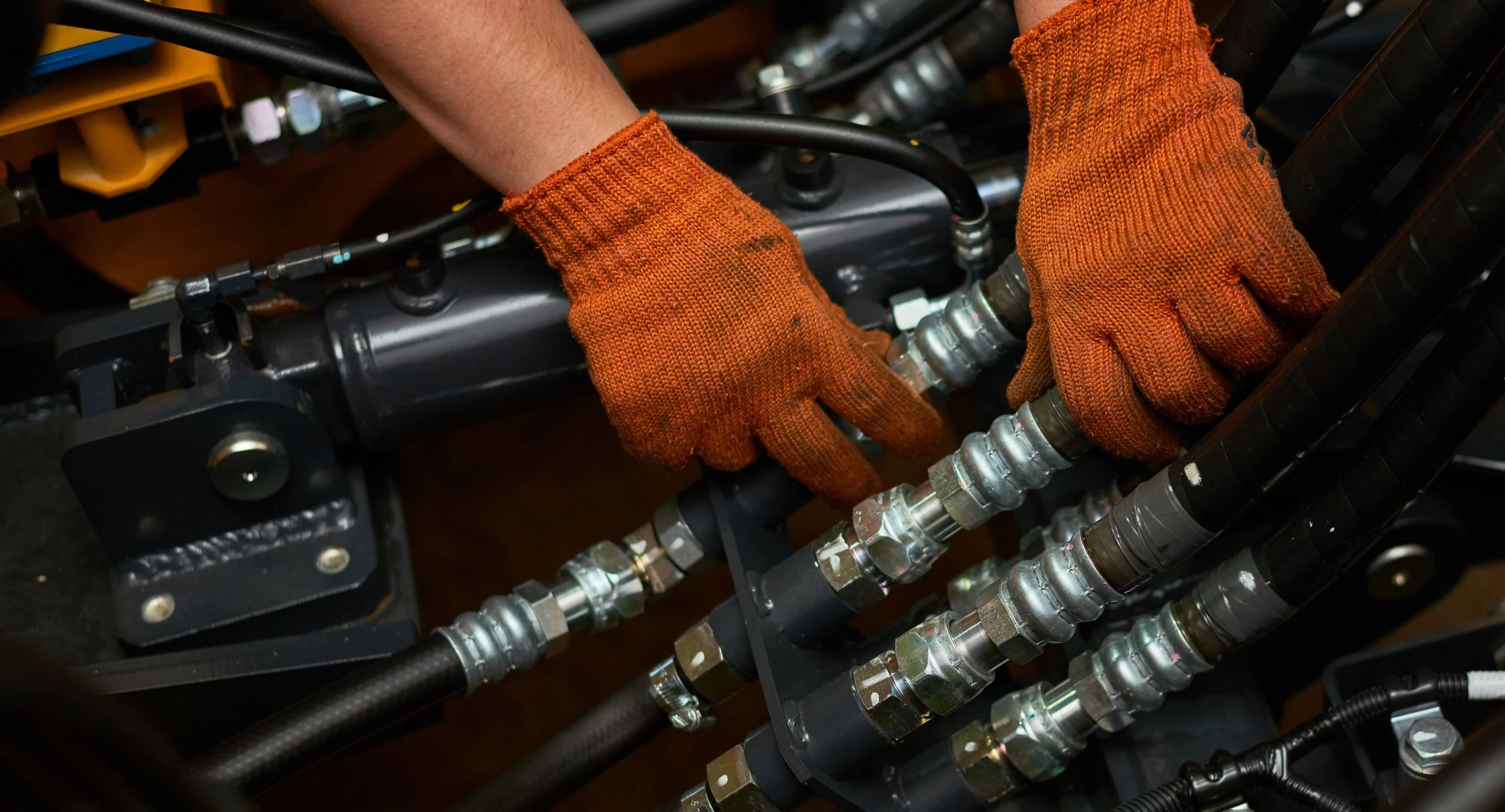
The hose is the cheapest part of a hydraulic failure.
A hydraulic hose costs anywhere from tens to a few hundred dollars. One day of downtime on a jobsite can cost thousands because the machine stops and the project stalls. This guide adds up the full cost of a hydraulic hose failure, including downtime, explains why hoses fail, and shows how to get a machine back to work fast.
What a Hydraulic Hose Failure Really Costs
The expense is everything that stops while you wait for the replacement.
Here's an example. An excavator on a Seattle site bills out at $400 an hour, and a three-person crew works around it. A bucket line bursts at 10 a.m. If you have to order a replacement and it shows up tomorrow, you lose most of a working day.
Idle equipment. Eight hours of lost billing on the machine is $3,200 of revenue that doesn't come back.
Idle crew. People on the clock with nothing to do still draw wages.
Missed or pushed jobs. The work you didn't finish today bumps tomorrow's job, and sometimes the one after that.
Extended rental days. If the machine is rented, you pay whether it runs or not, and a delay can add rental days.
The Hidden Costs Beyond the Downtime
Downtime is the cost everyone sees. A blown line brings a few others with it.
Secondary damage. A burst hose dumps fluid fast. Run the system low, and you risk damaging the hydraulic pump, which turns a hose job into a much bigger repair.
Contamination. Dirt gets into an open line, and debris from the failed hose can circulate through valves and cylinders. Flushing a contaminated system costs time and money.
Cleanup and environmental exposure. Hydraulic oil on soil or near storm drains has to be cleaned up properly. On some sites that means reporting, absorbent materials, and disposal costs.
Safety. This is the one people underestimate. A pinhole leak under high pressure can inject fluid through skin (a fluid injection injury), and that's a medical emergency that can lead to amputation. Never run a hand along a pressurized hose to find a leak.
Rush premiums. When local replacement isn't available, expedited shipping adds to everything else.
Why Hydraulic Hoses Fail (and How to See It Coming)
Most hydraulic hose failures are predictable. These are the usual causes.
Abrasion and bad routing. A hose that rubs against the frame, another hose, or a moving part wears through. This is the most common cause.
Heat and age. Engine heat and exhaust heat harden the outer cover, and every hose has a service life.
Pressure spikes. Shock loads and over-pressurization can exceed the hose's rating.
Poor assembly or a mismatched fitting. A bad crimp (the metal collar pressed onto the hose end to hold the fitting), the wrong fitting, or a hose rated below the system's pressure won't last.
Catch problems early by looking for blistering on the cover, weeping or wet spots, kinks, flattened sections, and corrosion where the fitting meets the hose. Any of those means replacement is coming soon.
How to Minimize Downtime When a Hose Blows
First, keep records. Write down the hose spec or snap a photo of the hose and both fittings on your critical machines, and keep it in the cab or on your phone. When a hose fails, bring the old one in so it can be matched exactly. The equipment sets the fitting spec, so the goal is an exact match.
Second, know where you'll get it built, and know the size of the line. Mobile hose vans can fix smaller lines on site, and most are set up for hose up to about 2 inches, because the presses that crimp bigger hose don't fit in a van. When a 3- or 4-inch line goes, the van can't fix it, and an ordered part can cost you the rest of the week. A local shop that builds the replacement on the spot gets you back to work the same day.
Same-Day Hydraulic Hose Replacement in Seattle with Nebar
A hydraulic hose failure costs far more than the hose, and the fastest fix is a locally built exact match, same day.
Nebar has been building hoses in Seattle for more than a hundred years. For hydraulic hose repair in Seattle, bring in the failed hose, and we'll match it at the counter and build most standard assemblies while you wait. Large-diameter hoses are where we stand apart. We've banded 6-inch hose with cam lock fittings in-house, including fish pump hoses for boats unloading at the canneries, and we stock fittings in brass, steel, aluminum, and black iron.
Take a look at our hydraulic hose and fittings work and our industrial hoses for heavy equipment, or contact the counter.
FAQ
How long do hydraulic hoses last?
It depends on pressure, heat, routing, and how hard the equipment works. Many last several years, but abrasion or heat can shorten that a lot. Inspect them regularly and replace a hose at the first sign of wear.
How fast can I get a hydraulic hose made?
At Nebar, we can build most standard hydraulic assemblies while you wait at our Ballard counter.
What makes hydraulic hoses burst?
Abrasion, heat, age, pressure spikes, and poor assembly are the usual causes. A hose rated below the system pressure or a bad crimp will fail early.
Can I bring my old hose in to match it?
Yes. Bringing in the old hose with both fittings attached is the fastest way to get an exact replacement.