
How Long Do Marine Hoses Last? Why Saltwater Cuts Hose Life Short in the Pacific Northwest
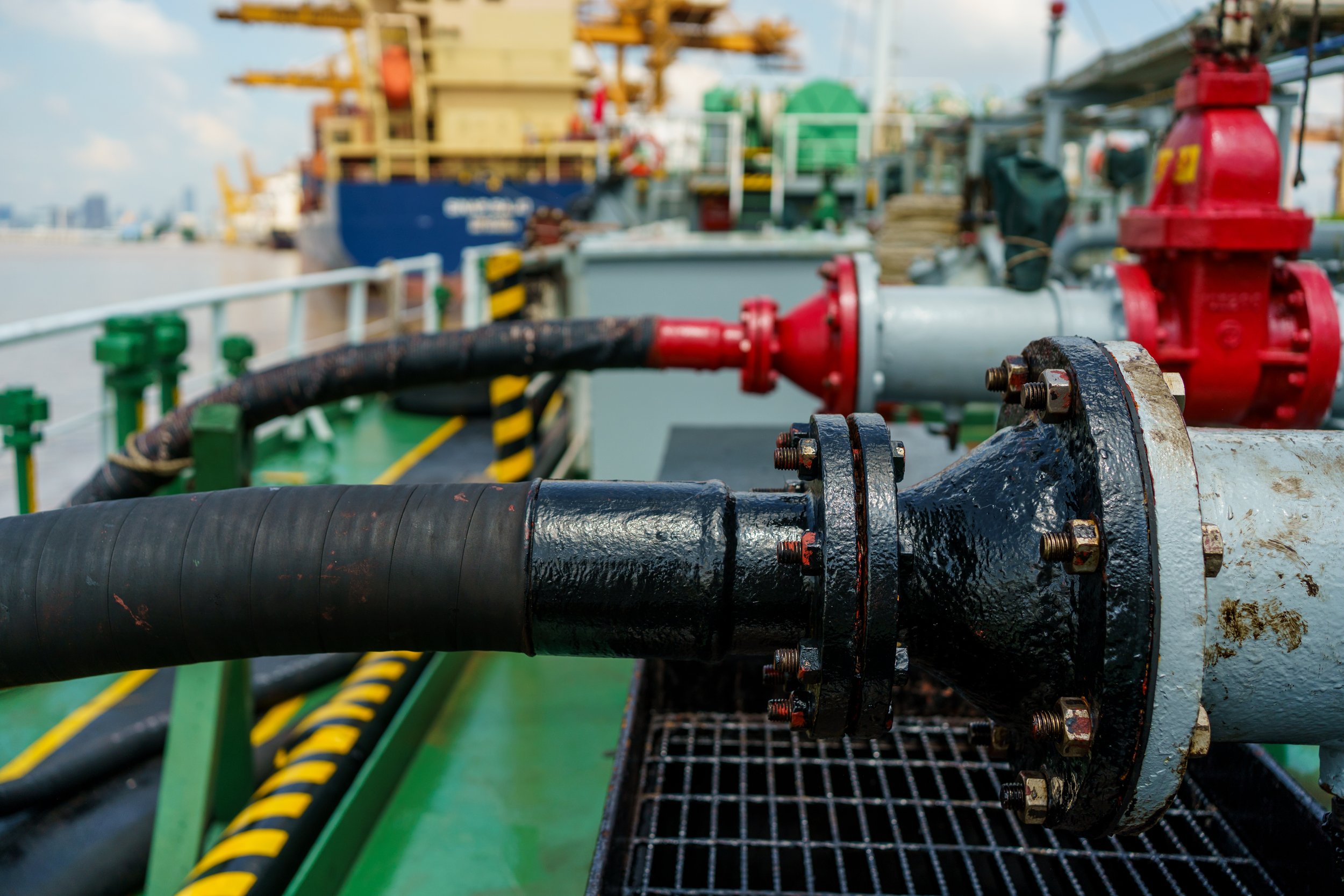
A hose can look completely fine right up until it isn't. That's the part most operators don't expect: the failure usually isn't a slow fade you can watch coming; it's a hose that seemed fine at the last inspection and isn't fine anymore, often in places you can't easily see.
How Long Do Marine Hoses Last
The honest answer is "it depends.” There's no single number that covers marine hose lifespan across every hose on a boat, because different hoses get held to different standards for important reasons. Fuel hoses and shaft seal hoses are the exception. Both are commonly recommended for replacement around the ten-year mark no matter how they look, since the failure that matters most starts on the inside, where you can't see it until it's already a problem for the systems they serve. Most other hose types don't have as firm a consensus number, which is exactly why regular inspection carries more weight than a calendar date.
Age is only half the story. Two identical hoses installed the same year can be in completely different condition five years later, because how and where a hose is used on a boat.
Why Saltwater Is Hard on Boat Hoses and Fittings
Saltwater hose damage doesn't just sit on the surface and look ugly. Salt accelerates corrosion at every clamp, fitting, and connection point, working into threads and under clamp bands where it's hardest to see and hardest to clean off. Once corrosion starts at a fitting, it tends to keep going, whether or not the hose itself is holding up.
The hose material takes its own beating too. UV exposure and ozone in the air break down rubber compounds and the reinforcement layers inside the hose wall over time, which is why a hose that's baked in the sun for a few seasons can turn stiff and start cracking.
This is why marine hoses aren’t just automotive hoses with a different label. They’re built with reinforcement, fire resistance, and low fuel permeation specifically because a boat asks more of a hose than a car does, and the fittings that go with it are typically brass or 316 stainless for the same reason a hose clamp from the hardware store doesn't belong on a boat: automotive-grade parts are built for a different environment, and it shows up fast if they’re used in more extreme saltwater environments.
The Pacific Northwest Factor: Salt, Damp, and Temperature Swing
Puget Sound doesn't give hoses much of a break. Boats here deal with saltwater, a damp climate that doesn't really dry out for most of the year, and enough seasonal temperature swing to put rubber and fittings through repeated cycles of expansion and contraction. That combination is harder on hoses and fittings than any one of those factors on its own.
A lot of boats in this region also stay in the water or in unheated storage for most of the year rather than getting hauled out for the off-season, which means the parts that fail from constant moisture simply don't get the recovery time they might somewhere drier. Walk any dock in Ballard and you'll see working fishing boats tied up next to weekend cruisers, and the saltwater doesn't treat one differently than the other. The physics are the same whether the boat is out chasing salmon or out for a Sunday cruise.
What Wears Out First: Common Signs of Marine Hose Failure
Bilge and Raw Water Hose: Never Really Dry
Bilge hose and raw water cooling hoses don't get an off-season from moisture. They're wet more or less constantly, which means no recovery time between exposures. Over time that shows up as internal cracking or sections that collapse.
This is also the category where a failure matters more than it does elsewhere. Hose and fitting failure below the waterline is one of the more common ways boats end up taking on water at the dock. Failure is not always from a dramatic accident, but from something as ordinary as a hose that finally gave out while nobody was aboard to notice.
Fittings and Clamps: Where Corrosion Starts
Put two different metals together in saltwater and you get galvanic corrosion, where the two act almost like a weak battery and the more reactive metal corrodes away first, protecting the other one until it's gone. That's exactly what happens when a standard zinc-plated clamp ends up on a boat instead of a 316 stainless one. It corrodes fast, and once it lets go, it doesn't matter how good the hose behind it is.
This is one of the details critical to hose failure: the hose will fail simply because the fitting or clamp weren't the right metal for the environment or use case.
How to Make Your Boat Hoses Last Longer
Rinsing exposed fittings and hardware with fresh water after use cuts down on salt buildup before it has a chance to start working. Drying out what you reasonably can, and giving hose and fittings a real off-season during storage rather than leaving everything wet and uncovered, helps more than most owners expect.
Starting with the right materials matters just as much as maintenance. Marine-rated hoses and 316 stainless or bronze fittings cost more up front than the generic alternative, and they're the reason a boat doesn't end up replacing the same fitting every other season.
Regular inspection is still the cheapest insurance available. A five-minute look at hose and fittings during routine maintenance catches soft spots, weeping, and corrosion long before any of it becomes a failure, and it costs nothing compared to what a failure costs.
When to Replace vs. When to Just Inspect
Replace anything showing cracking, sponginess, visible corrosion at a fitting, or weeping, especially on the fuel hose or anything below the waterline where the consequences of a failure are more serious than an inconvenience. When a hose is approaching the upper end of its expected service life, even without obvious symptoms, that's worth a close look rather than an assumption that it's fine because it was fine last year. If a hose looks and feels sound, shows no wear signs, and is well within a normal service window for its type, ongoing inspection is the right call rather than replacement for its own sake.
We've written separately about what a proper winterization checklist should cover, and hose and fitting inspection belongs on that list every single year, not just the years something feels off.
Local Marine Hose Expertise in Seattle
Nebar has been servicing hoses and fittings in Seattle for more than a hundred years, which means we've seen what saltwater and this climate do to hose and fittings across just about every kind of boat that ties up around here. There's a reason people keep coming back to the same counter for decades instead of shopping around: the person helping you will probably remember you and your boat. We handle walk-in service and custom hose builds, we work in Coast Guard certified and DOT approved materials, and we know the difference between a hose that's ready for marine service, and hose that isn’t, and we’ll make sure you always get the hose you need.
If you're not sure where your hoses stand, bring the boat by or give us a call before the next season starts. It's a lot easier to have that conversation now than after something fails.
Contact us or take a look at our marine hose and fittings work.
FAQ
How long do marine hoses last?
It varies by hose type and use. Fuel hoses and shaft seal hoses are commonly recommended for replacement around the ten-year mark regardless of appearance, but most other hose types don't have as firm a consensus number, which is why environment and regular inspection matter more than age alone.
Does saltwater really damage hoses faster?
Yes. Salt accelerates corrosion at fittings and clamps, and the damp, salty air common in this region also contributes to the breakdown of the rubber and reinforcement inside the hose itself, not just the metal parts around it.
How do I know if a hose needs replacing?
Look for cracking, stiffness, soft or spongy sections, weeping at the fittings, visible corrosion on clamps, or any unusual smell near fuel lines. Any one of those is a reason to have it looked at rather than waiting for it to fail on its own.