
How to Winterize Your Boat Hoses Before the North West Wet Season: A Seattle Owner's Checklist
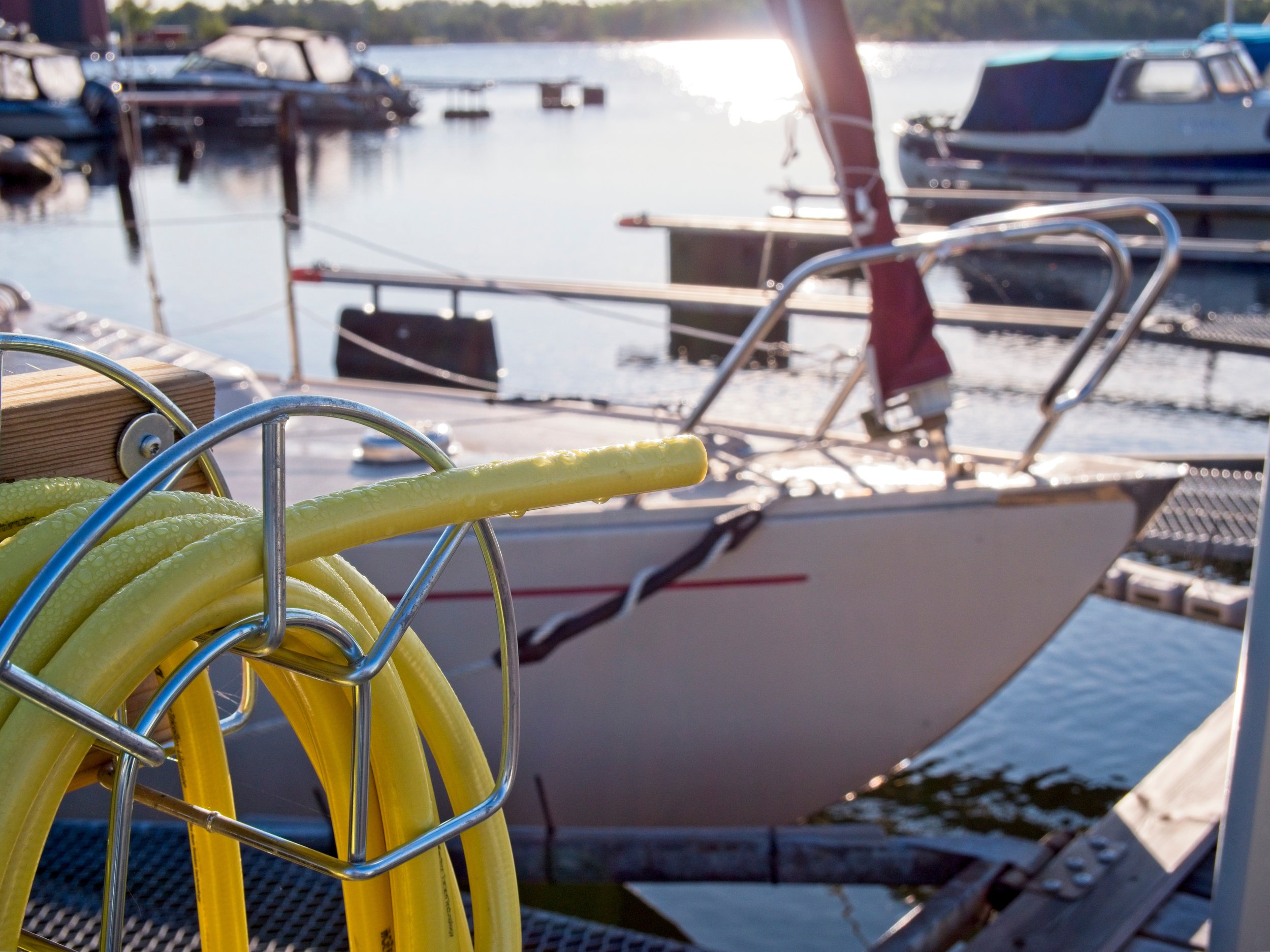
A boat that sits all winter doesn't fail in the spring because of one big thing. It's almost always a hose nobody looked at in October.
Why Winterizing Your Boat Hoses Matters in the Pacific Northwest
The Pacific Northwest doesn't really have an off-season for moisture. Rain, damp air, and saltwater don't pause just because the boat isn't running, and a hose that's been weakening all summer often isn’t discovered until the first hard use in spring. A hose that fails at haul-out is an inconvenience. A hose that fails during winter layup, with nobody aboard to notice, is a different problem entirely, with the failure only being discoverable when the boat is returned to service.
Boat winterization done right treats hose and fittings as part of the job, not an afterthought to draining the engine. Skip it, and spring usually costs more than the twenty minutes it would have taken in the fall.
When to Winterize Boat Hoses (and Why Timing Beats Guessing)
For most boat owners in Puget Sound, September through November is the real window to winterize, before the first hard freeze and before the wet season fully sets in. Waiting for a cold snap to force the issue means doing rushed work in worse weather.
This is also the stretch when boats coming back from a season fishing Alaska waters come through. The timing lines up whether a boat spent the summer working or just cruising the Sound, which is part of why this window gets busy fast. If you're wondering whether it's time, the best signal is the calendar more than any specific symptom. Don't wait for a hose to tell you it's overdue.
Which Boat Hoses to Inspect Before Winter
Fuel Hoses: When to Replace and Coast Guard Requirements
Coast Guard hose ratings exist for a reason that matters more in winter than most owners realize. Both Type A1 and Type A2 are built for enclosed spaces like a below-deck engine compartment. A1 covers fuel feed lines, the ones that carry fuel continuously from tank to engine, and it has the highest fire resistance and the lowest permeation, meaning the least amount of fuel vapor that can seep through the hose wall itself. That matters because it's the vapor, not the liquid fuel, that actually ignites in an enclosed engine space. A2 covers fill and vent lines, which don't sit full of fuel all the time and are allowed to let a bit more vapor through as a result. There are also ventilated-space equivalents of each, which is a distinction worth confirming rather than guessing at if your boat's layout isn't a standard enclosed engine room.
Using an automotive hose that isn't rated for any of these isn't a bad idea merely because of a technicality. Hoses made for automotive applications lack the fire resistance and low permeation the marine systems need to be built around to be safe, and that gap matters most in an enclosed engine space.
Ethanol blends, E10 and up, can degrade older or unrated hoses from the inside well before it looks obviously bad on the outside. Before layup, check for a gas smell that wasn't there before, sections that feel soft or spongy, and any weeping at the fittings. Any of those means it's time for a replacement, not just drain and store.
Bilge Hose Replacement and Off-Season Water Intrusion
A wet winter means rain and condensation finding their way into the bilge whether the boat runs or not, and the pump usually cycles more during a rainy PNW layup than it does during an actual season on the water. That's exactly the kind of steady, repeated stress that finds a weak hose or a marginal clamp. A bilge hose that's cracking, collapsing, or held on with a loose or corroded clamp doesn't get any easier on itself just because the boat isn't moving.
The real risk in winter isn't the hose alone, it's that nobody's checking it. A slow failure during boating season usually gets noticed within a day or two. The same failure in January, on a boat nobody's visited in three weeks, has a lot more time to become a real problem that only gets discovered when the boat is put back in service. Confirm the hose is sound and that both the pump float switch are working before you walk away for the season.
Wet Exhaust Hose Replacement
A wet exhaust hose carries hot exhaust gas and cooling water together, and the heat cycling between running and idle wears the rubber down over seasons, especially near the exhaust elbow where temperatures run highest. Before layup, check for soft spots near the elbow, visible cracking, and corrosion at the clamps.
A failed wet exhaust hose doesn't just make a mess. It can let water end up somewhere it shouldn't, whether that's the bilge or back toward the engine, which turns a hose problem into an engine problem.
Raw Water Cooling Hoses: Draining and Winterizing
Any water left sitting in raw water lines can freeze, and freezing water expands enough to crack a hose, a fitting, or worse, the engine block itself. Before a hard freeze hits, close the raw water seacock (the through-hull valve that lets outside water into the system), drain the strainer, and drain or flush the raw water system completely. If your setup calls for it, run non-toxic antifreeze through the system rather than trusting it's fully empty.
While the system is open, take the extra few minutes to inspect the hoses and clamps for saltwater corrosion. You're already looking at it, and it's the easiest time all year to catch a problem before it becomes one.
Sanitation and Potable Water Hoses
A sanitation hose eventually permeates and holds odor even after a thorough cleaning, which is a sign it's time to replace rather than cleaning again. Potable water lines need the same freeze protection as everything else, either drained completely or protected with non-toxic antifreeze rated for drinking water systems. When it's time to replace, use a hose rated for potable water, not whatever's on hand, since the wrong hose can affect water taste and safety next season.
Your Boat Hose Winterization Checklist
Fuel System
Inspect all fuel hoses for cracking, softness, or a gas smell
Replace any fuel feed hose near or past the ten-year mark
Confirm feed lines are rated A1 and fill or vent lines are rated A2, not automotive hose
Bilge
Check bilge hose for cracking, collapsed sections, or a loose or corroded clamp
Confirm the bilge pump and float switch are both working
Wet Exhaust
Check for soft spots near the exhaust elbow
Check clamps for corrosion
Raw Water Cooling
Close the raw water seacock
Drain the strainer and flush the system
Add non-toxic antifreeze if your setup requires it
Inspect hoses and clamps for corrosion while the system is open
Sanitation and Potable Water
Replace sanitation hose if it holds odor even after cleaning
Drain or protect potable water lines against freeze damage
Everything Else
Confirm every hose and fitting is actually marine rated for its application, not a hardware-store substitute
Signs a Marine Hose Needs Replacing, Not Just Draining
Draining and storing a hose assumes the hose itself is still sound. Cracking, soft or spongy sections, a gas smell near fuel lines, and visible corrosion at a fitting are all signs the hose has crossed from "needs winterizing" to "needs replacing." Winterizing a hose that's already failing just stores the problem until spring instead of solving it.
Same-Day Marine Hose Replacement in Seattle
Nebar has been a trusted hose and fittings partner to Seattle for more than a hundred years, which means winterization season isn't new to us. We handle walk-in service with same-day turnaround, so a hose that needs replacing before layup doesn't have to mean losing the boat to a shop queue for a week. We only make marine hoses with marine-specific stock, not automotive parts pressed into a job they weren't built for.
If you're not sure whether something needs replacing or not, bring in the hose before the season closes and we’ll inspect it for you. It's a faster conversation than it sounds like, and a lot cheaper than finding out in April.
Check out our marine hose and fittings work, browse our hose fitting frequent questions, or contact us for same day hose service.
FAQ
How often should I replace marine fuel hose?
Fuel feed hoses are commonly recommended for replacement around the ten-year mark regardless of appearance, since the damage that matters most happens on the inside. Fill and vent hoses can sometimes run longer, but any hose showing cracking, softness, or a gas smell should be replaced immediately, regardless of age.
Can I reuse hoses next season?
Sometimes. If a hose is sound, shows no cracking, softness, or corrosion at the fittings, and is well within its expected service life, draining and proper storage is enough. If it's showing any warning sign, or it's a fuel hose approaching or past the ten-year mark, reusing it is a bet you don't need to make.
What does Coast Guard approved hose mean?
It means the hose meets specific standards for fire resistance and for how much fuel vapor can pass through the hose wall itself, called permeation. Type A1 covers fuel feed lines with the highest fire resistance and the least vapor permeation, Type A2 covers fill and vent lines under a somewhat higher permeation allowance, and there are ventilated-space equivalents of each as well. Which one applies depends on where the hose runs and what it carries, so it's worth confirming rather than assuming. Automotive hose isn't built or tested to any of these standards, which is why it doesn't belong on a boat's fuel system.